Red Pine on Dolly Sods
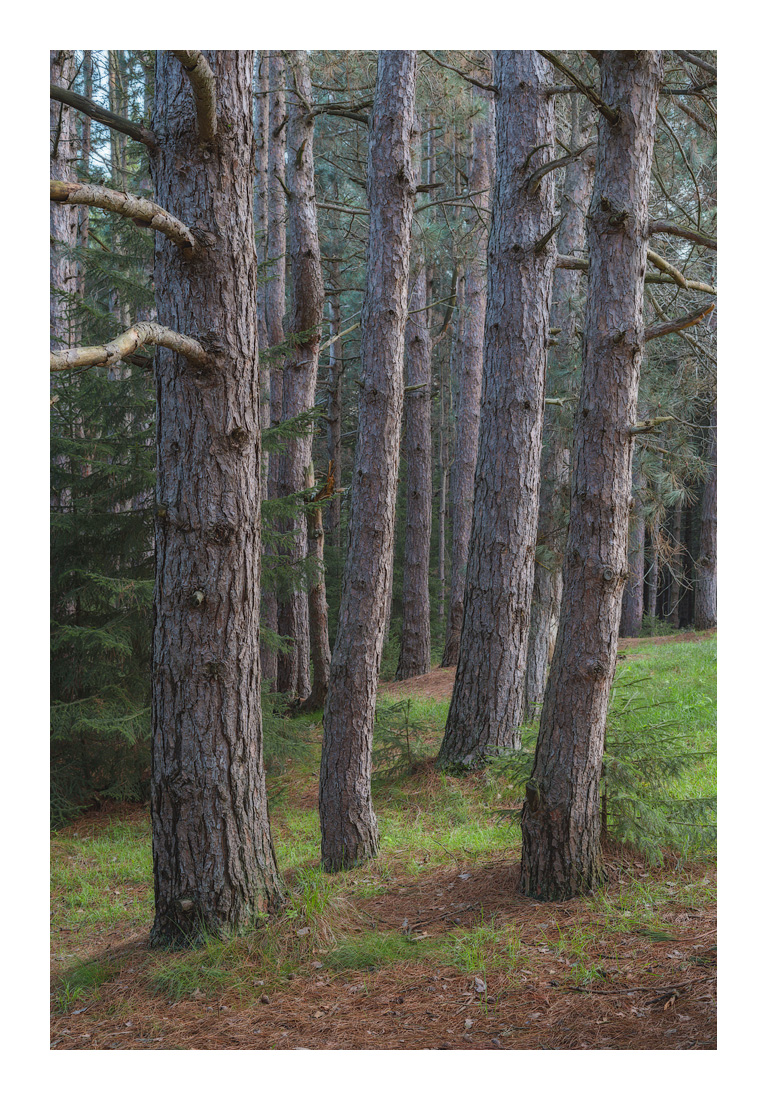 Pinus resinosa. While the distribution map shows a couple of small spots in the Monongahela National Forest, its native range is largely in Canada extending south to northern Pennsylvania. They are doing well here in the northern boreal forests and heath barrens of these mountain tops, but they were planted here. I am guessing they were planted by the CCC (Civilian Conservation Corps) in the 1930s – 40s after the massive deforestation of the native red spruce (Picea rubens) and balsam fir (Abies balsamea) by the logging industry. There are even a few Norway spruce (Picea abies) in some spots, but fortunately not many.
The Dolly Sods we know today is very different from what it was in 1900. After the total clear cutting of these mountain tops, the forest duff – estimated to be from 4 to 12 feet thick – and all the branches and tree tops left from the logging dried out and burned. The fires must have been intense because it burned the duff down to bedrock in many places. I suspect the heath barrens didn’t exist at all before then. It will be thousands of years before these mountain tops regain their former mantle of huge red spruce – 3 feet in diameter. That assumes climate change doesn’t prevent it from occurring. And the really sad thing is this was all done to provide pulp for newsprint. Nothing more lasting or significant than that. There is a lesson here, but sadly those who most need to learn it will not be aware of it.
I know I am preaching to the choir, but the idea that we are somehow apart from nature and that nature is here for us to exploit is just wrong. Nobody gave us dominion over anything – we stole it, without any sense of responsibility.
50mm Zeiss Makro-Planar ZF.2, Nikon 800e, Lr5, Ps CS6.