Posts Tagged: Tsuga canadensis
Two Dead Red Spruce and a Stressed Hemlock Walk Into a Bar . . .

On Canaan Mountain. 100-400mm Sony GM, Sony a7R3, Lr 6, Ps CS6.
Red Spruce and Hemlock in the West Fork Greenbriar River Valley
 Over the weekend of the 4th I visited this beautiful valley for the first time. It lies at the eastern foot of the Allegheny Front just north of Durbin. What a gorgeous place! BIG spruce, hemlock, yellow birch, and hawthorns in the meadows! A lovely little river. Trout rising without caution. Walls of rhododendron in bloom everywhere. There is an old railroad rail to trail that runs the entire length of the valley of perhaps 25 miles. From here I went to the Laurel Fork Wilderness, but there was no comparison. Perhaps in 100-200 years the Laurel Fork Valley will be as beautiful. This is the first of several images I will post from this valley.
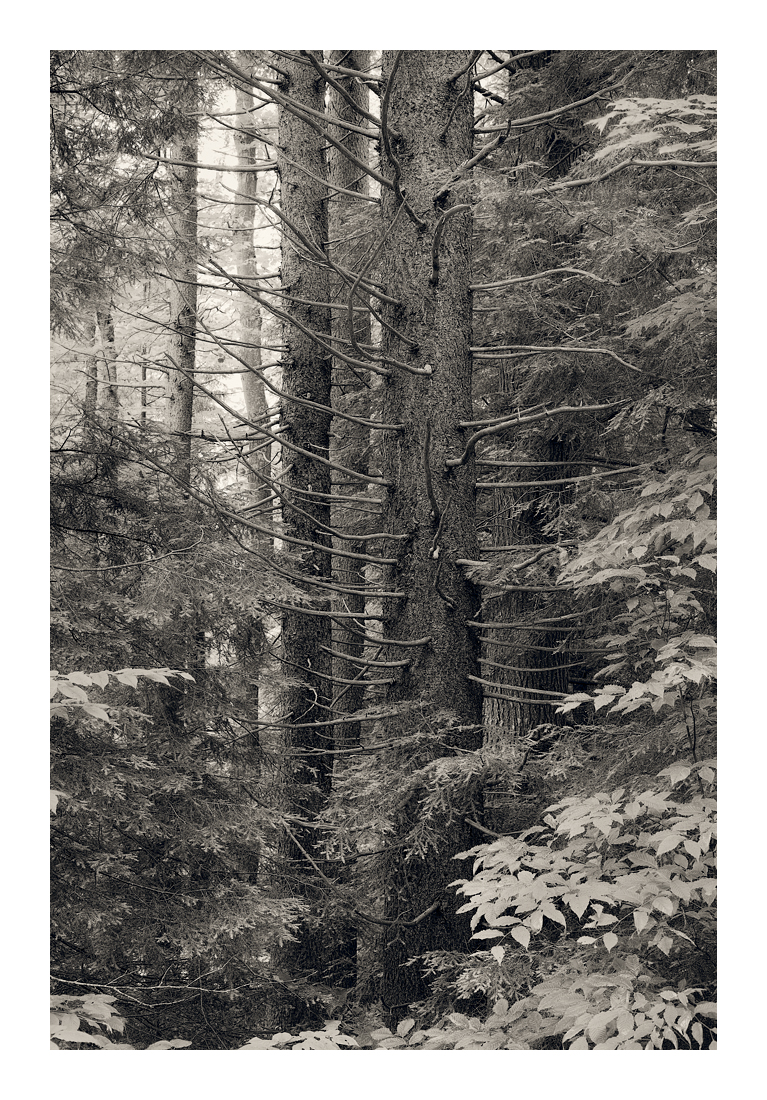
Massive red spruce, Picea rubens, and behind it on the right (different bark texture) is an even more massive hemlock, Tsuga canadensis.
Sigma DP3 Merrill, Sigma Photo Pro, Lr 5, Ps CS6.
Heart’s Content

Another image from my visit to the Allegheny National Forest.
Sigma DP3 Merrill, Sigma Photo Pro, Ps CS6.
Heart’s Content
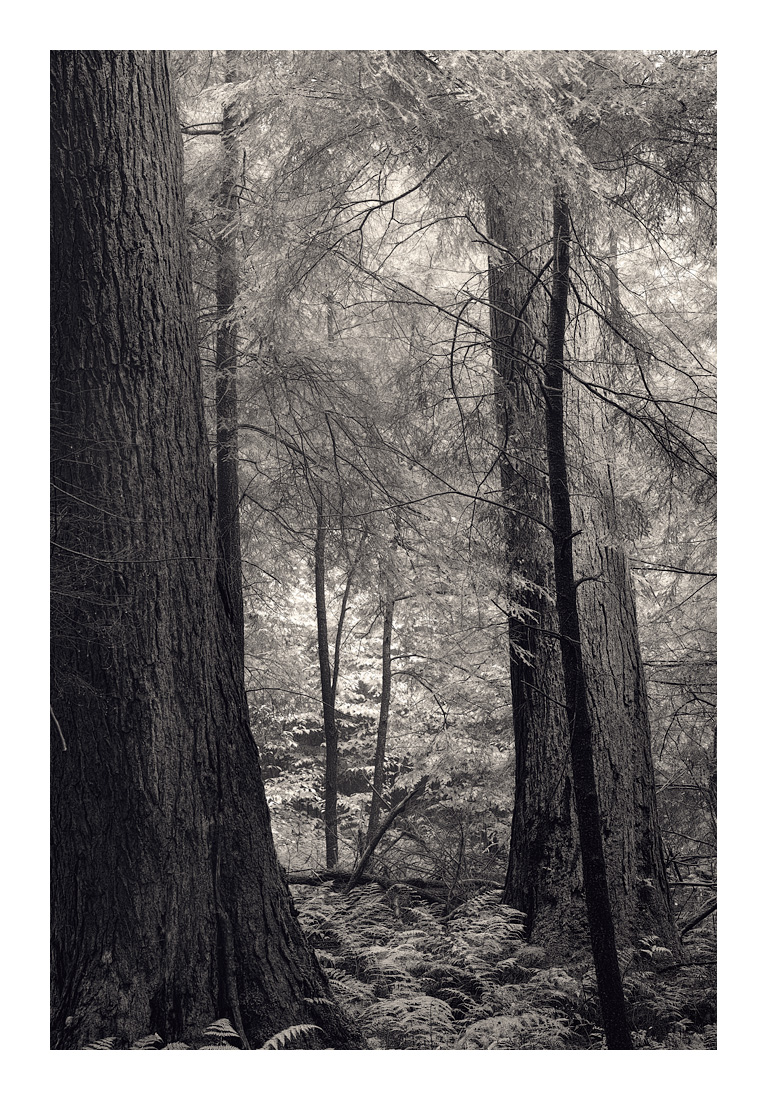
A couple of massive hemlocks in one of the few areas in the East that were spared the lumbermens’ axe. It is hard to convey in a single image just how massive these things are. The trunks at the ground are impressive enough (the ferns are probably knee high on me) but when you look up and they continue straight up into the clouds you know you are in the presence of life that was probably in existence when Columbus first sailed into the Caribbean. Much of the East was like this at one time. This is the appropriately named Heart’s Content area in the Allegheny National Forest in northwestern Pennsylvania. The area has a lot of virgin hemlock (Tsuga canadensis), but it also has white pine (Pinus strobus), yellow birch (Betula alleghaniensis), and sugar maple (Acer saccharum) – all virgin growth and all massive. I have seen only one other hemlock in my life that rivals these in size, and it unfortunately is now gone.
I will be posting more images from Heart’s Content over time.
Sigma DP3 Merrill, Sigma Photo Pro 5, Ps CS6.
Two Hemlocks and a Red Spruce Walk Into A Bar…
 OK, so my sense of humor is obtuse and completely desiccated. This is, in fact, two hemlocks (Tsuga canadensis) and a red spruce (Picea rubens) on the Nature Conservancy property in Canaan Valley.
75mm SMC Pentax-A 645, Nikon 800e, Lr5, Ps CS6. Wanna know about my tripod? No? Good.
Canaan Mountain
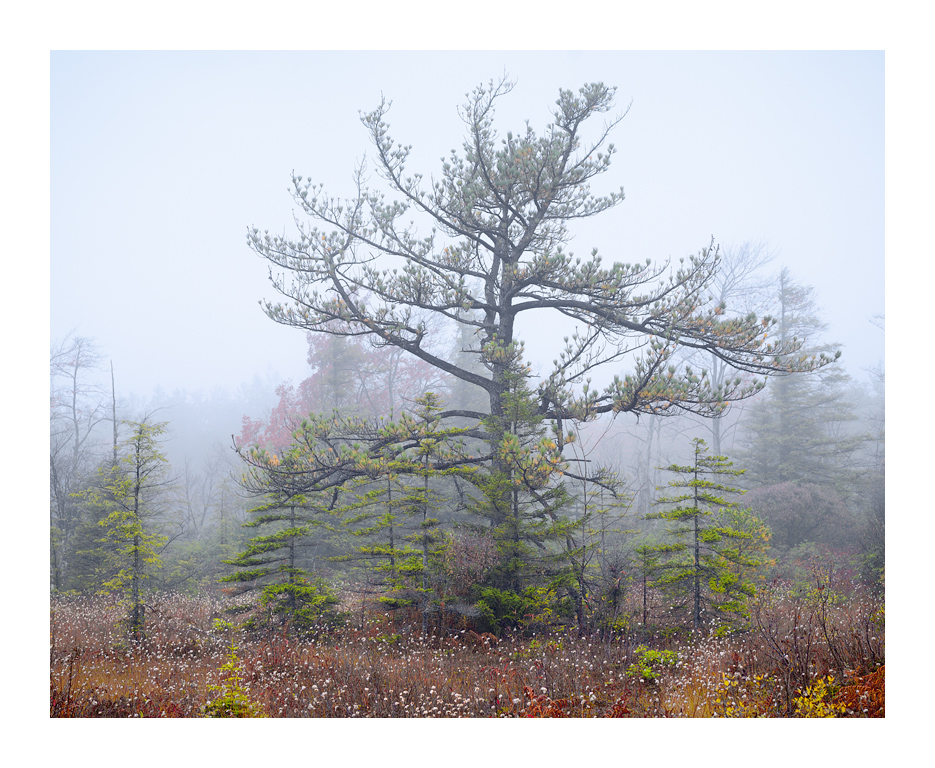 A red pine, Pinus resinosa, and companion red spruce, Picea rubens. The one on the far left and the tree on the far right in the distance is a hemlock, Tsuga canadensis. That these spruce are clustered around the red pine is no accident. This is a harsh and nutrient poor environment. The red pine offers some meager shelter but probably more significant is the soil enrichment provided by its fallen decaying needles. You can see that the red pine is itself struggling and might not survive many more years.
This is the headwaters bog for Red Run which tumbles its way down the mountain to the Dry Fork, downstream from Hendricks.
28-90mm Leica Vario-Elmarit, Nikon 800e, Lr4, Ps CS6.
Canaan Mountain Bog
 Canadian hemlock, Tsuga canadensis, have a hard time unprotected at this altitude. I think it is the wind more than anything else that damages them so here. But this is a bog and they must withstand constantly wet (or frozen) feet. Mostly plants seem to be growing in the peat layer, which is perhaps 12 inches thick. Beneath that is a layer of water, then rock.
There is a little of everything in the foreground, from the left and skipping duplicates: Ilex mucronata (nemopanthus – mountain holly), Rhododendron maximum, Spagnum sp. (often red), Vaccinium sp. (blueberry), Osmunda cinnamomeum (cinnamon fern), Kalmia latifolia (mountain laurel – in bloom), Picea rubens (red spruce). Yes, all native!
28-90mm Leica Vario-Elmarit, Nikon 800e, Lr4, Ps CS6.