Posts Tagged: Juniperus virginiana
Red Cedar
 Juniperus virginiana heavily browsed by deer. This is at Schoolhouse Ridge South, Harpers Ferry NHP.
This and the previous image are the result of a new approach I am trying. Normally I try to keep everything sharply focused and even resort to focus stacking (shooting a series of images each with a different focal point, then merging them into a single image). These techniques certainly have their place, but in an effort to impart a more moody and less sterile cast I am shooting some with my lenses wide open. The resulting shallow depth of field, heavy vignetting, and overall softer rendering seems to serve some of my images well.
50mm Zeiss Makro-Planar ZF.2 at ƒ2, Nikon 800e, Lr4, Ps CS6.
Freshwater Storm

Yes, the sky, field, and light are nearly perfect. But where this fails is the two red cedars are lost in the trees at the horizon. If I had put on my 21mm (this was made at 28mm) and had gotten closer, the cedars would have gained prominence, both would extend into the sky, and I would have kept the sweep of the field intact. If I had gotten lower to the ground at 28mm I would have had depth of field problems. I could darken the cedars and lighten the back tree, but both cedars really need to break the horizon.
28-90mm Leica Vario-Elmarit, Nikon 800e, Lr4, Ps CS6.
Cedars and Storm
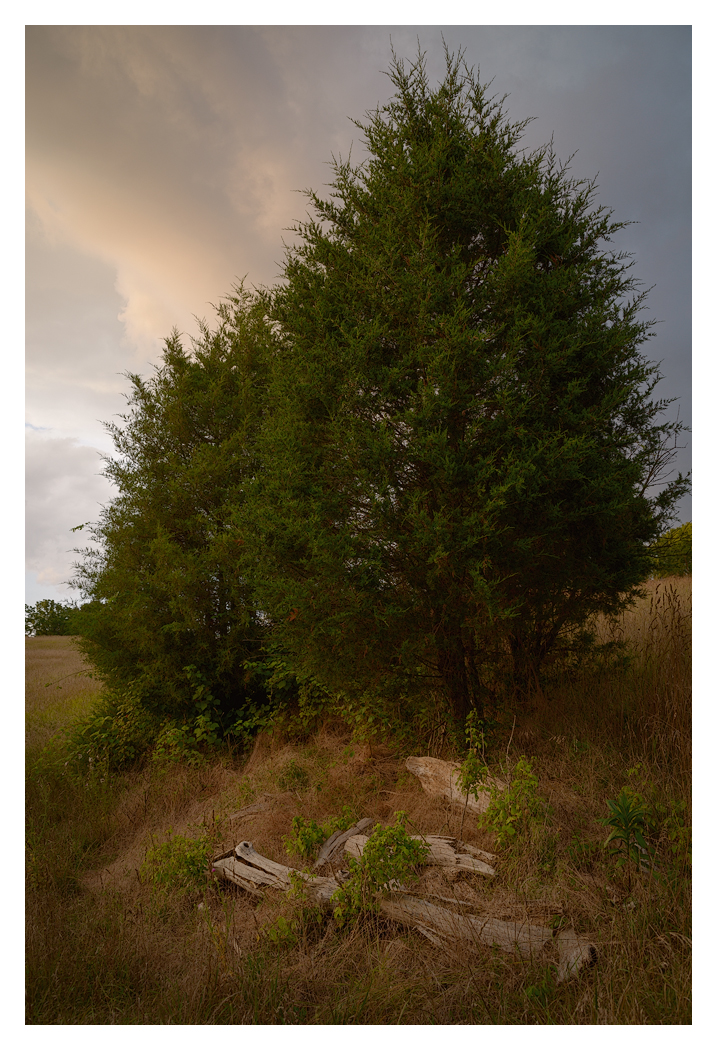 I got soaked this evening. The light was great and in the face of all evidence to the contrary I kept thinking it would stop raining any minute!
Red cedar, Juniperus virginiana, in their native habitat.
28-90mm Leica Vario-Elmarit, Nikon 800e, Lr4, Ps CS6.
Eastern Red Cedar
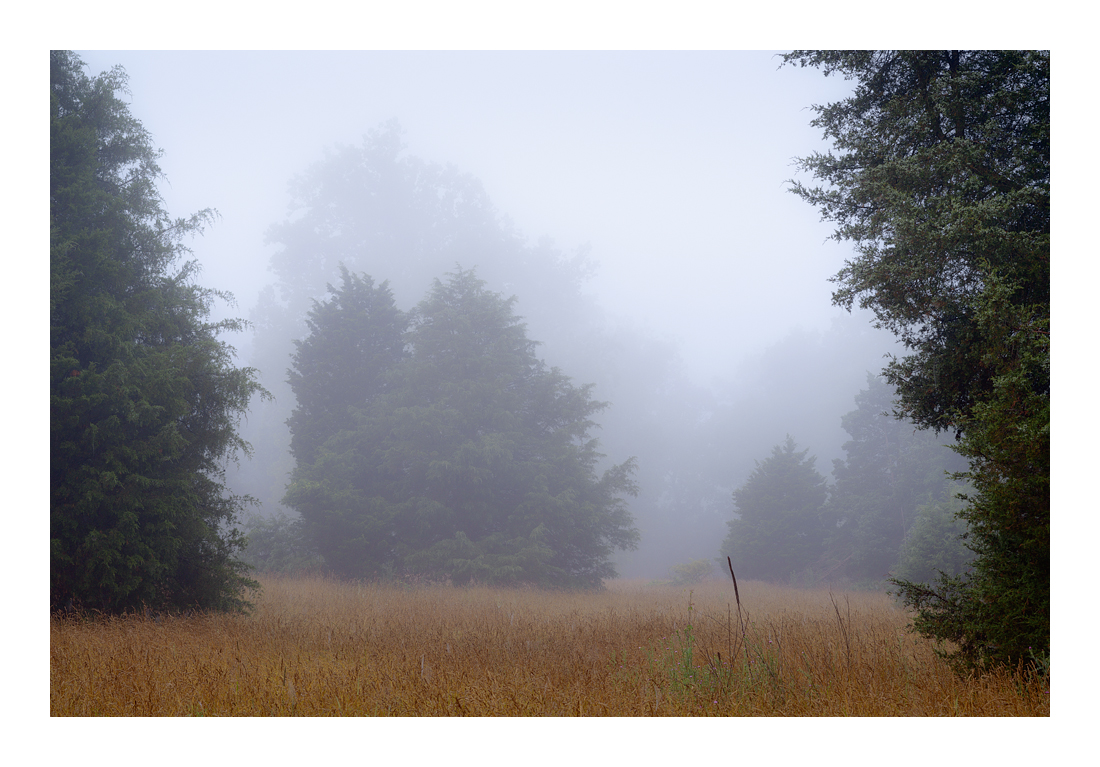
I have many lenses, most of which were purchased used. These same used lenses are often called vintage lenses because most are from camera systems that are no longer made. They are all manual focus lenses and many are from medium format systems. The reason I purchase these is not because they are inexpensive – only some of them are. It is for their unique image qualities like the nature of image contrast, how the lens renders as the image goes from in focus to out of focus (sometimes smoothly, sometimes harshly), how deep is its depth of field for a given aperture, its color rendering, how well corrected is it for aberrations, coatings qualities and flair resistance, and the nature of its sharpness.
The lens I used for this image is a purchase I am thrilled by. It is an 80mm ƒ2.8 N Mamiya-Sekor C for a 645 camera. It is very sharp right from ƒ2.8, color rendering is pleasing, virtually no chromatic aberrations, good contrast and flair resistance, it goes out of focus gently, the focussing mechanism is smooth with no play, it is small, light, cheap, and in virtually new condition.
80mm ƒ2.8 N Mamiya-Sekor C 645, Nikon 800e, Lr4, Ps CS6.
Eastern Red Cedar
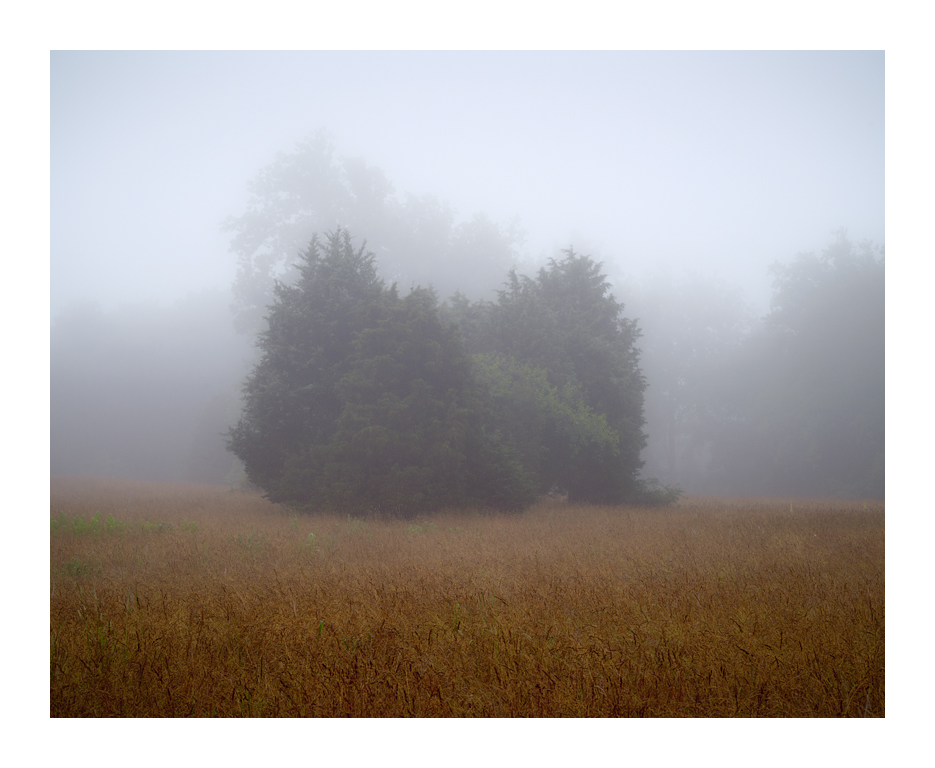 Juniperus virginiana, common throughout Eastern North America, is a juniper – not a cedar at all. Regardless, it is the red cedar wood that lines your cedar chest.
28mm-90mm Leica Vario-Elmarit ASPH, Nikon 800e, Lr4, Ps CS6.
Winter Fields – Lynn’s Goatyard
 28-90mm Vario-Elmarit ASPH, Nikon 800e, Lr4, Ps CS6.
North Fork Red Cedar
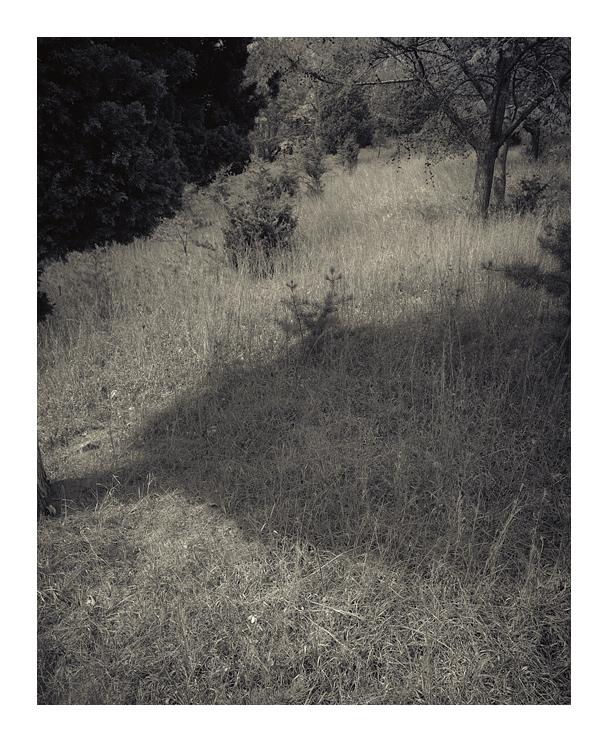 Here is a companion to a previous post of the same name.
21mm Distagon ZF.2, Nikon 800e, Lr 4, Ps CS 6.
Broken Red Cedar Branch
 21mm Distagon ZF.2, Nikon 800e, Lr 4, Ps CS 6.
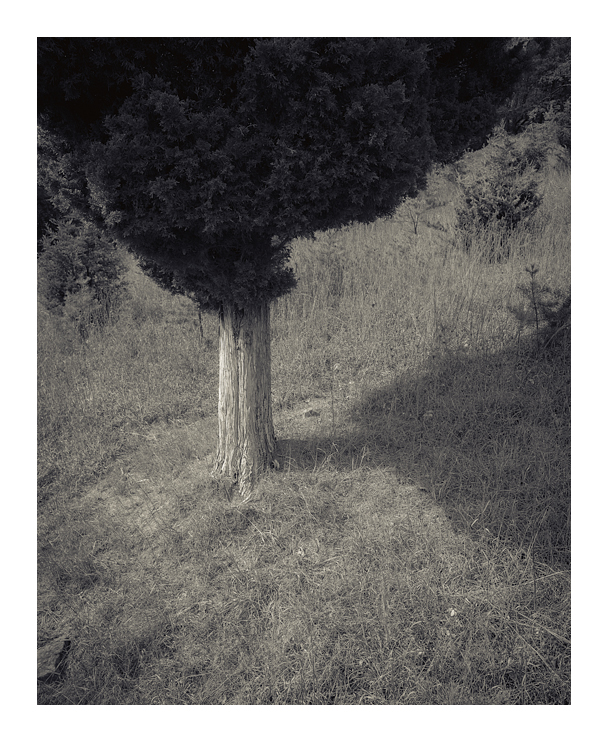
East Slope North Fork Mountain
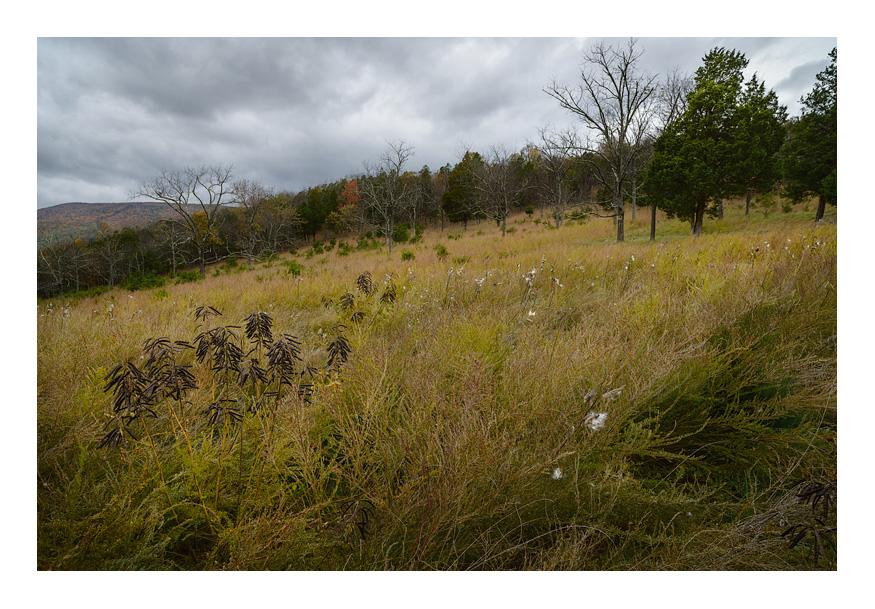 I fled to this place from the top of the big mountain because of the cold, rain, and wind. North Fork Mountain is in the rain shadow of the Allegheny Front (the big mountain), and this place is on the east side of North Fork, so weather has to make it past The Front and North Fork to get me here. Though there was gusty wind all day, I at least stayed dry and the temperature was in the 60s, not the 40s. A gust of wind did blow my tripod over when I wan’t paying attention to it, and yes the camera hit the rocky ground, but that is another story.
21mm Distagon ZF.2, Nikon 800e, Lr4, Ps CS6.