Posts in Category: Waterfalls
Sandstone Falls at Dusk
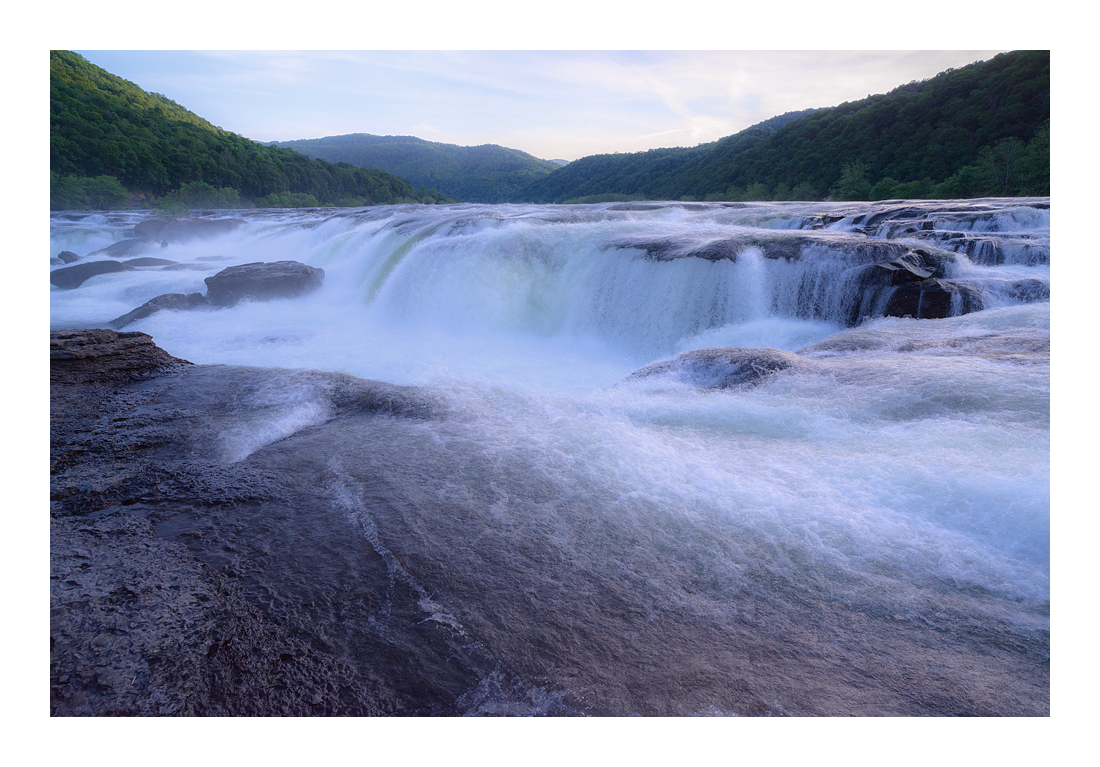 From my recent trip. This day with Randall Sanger, Robert Clark, and Josh Carlisle at Sandstone.
Updated 6/8/13 with a bit more refined version of the same image.
21mm Zeiss Distagon ZF.2, Nikon 800e, Lr4, Ps CS6.
Sandstone Falls
 From my recent trip. Shooting here with Bob Clark, Randall Sanger, and Josh Carlisle.
80-200mm Zeiss Vario-Sonnar CY, Nikon 800e, Lr4, Ps CS6.
Williams River

I just returned from a terrific photo tour of the Highlands. The first three days I spent alone visiting a few old favorite places (the Sods, Allegheny Back Mountain, Cranberry Wilderness, Cass, Green Bank Observatory). Then I met Bob Clark, Randy Sanger, and Josh Carlisle in Beaver WV, to photograph Sandstone Falls in the New River. These fellows are all accomplished photographers, and it was a pleasure spending time with them. You might be familiar with Randy’s successful book West Virginia Waterfalls: The New River Gorge. I understand Randy has a new book coming that will focus on the waterfalls of the Potomac Highlands. I am forever grateful to Randy for taking the time out of his busy schedule of leading photography workshops to show us around (Randall Sanger Photography).
I photographed one evening at Sandstone and the next morning at Grandview with the fellows, then headed back out on my own for another night and day before arriving back in Shepherdstown. I will be posting a number of images from this trip over the next few weeks.
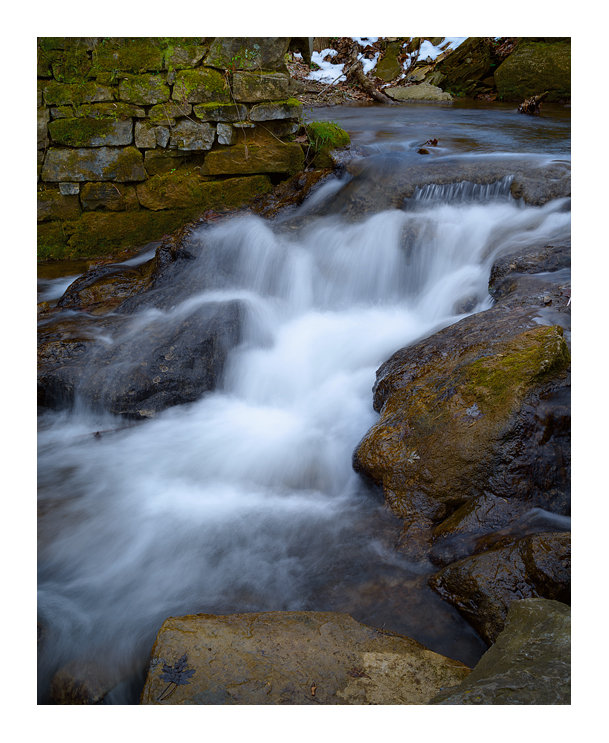
This image was made on the Williams River, adjacent to the Cranberry Wilderness. I photographed in the stretch of no-kill trout water that extends a few miles below the Tea Creek Campground. The Williams is a really lovely river that flows through an outstanding landscape.
28-90mm Leica Vario-Elmarit ASPH, Nikon 800e, Lr4, Ps CS6.
Elakala Falls
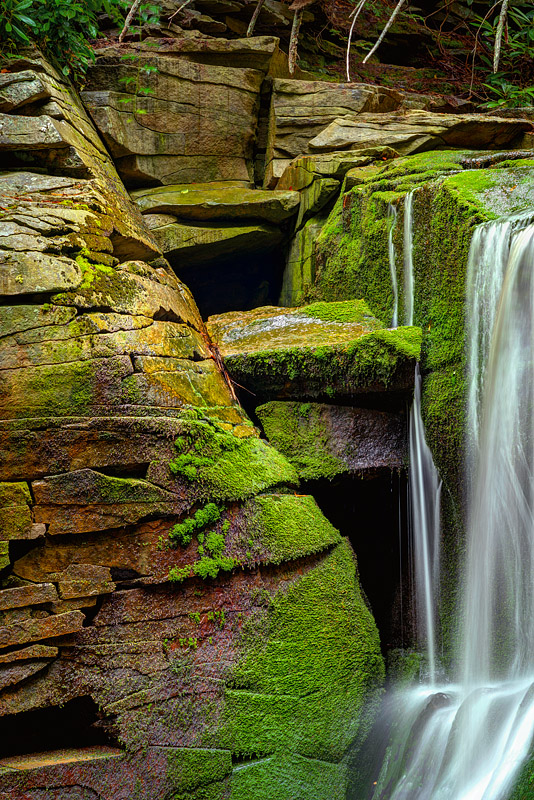
A three frame fused image. This is my take on the vice presidential debates. Actually this is far more graceful.
80-200mm Vario-Sonnar CY, Nikon 800e, Lr4, Photomatix Pro, Ps CS6.
Poor Piney Run Falls
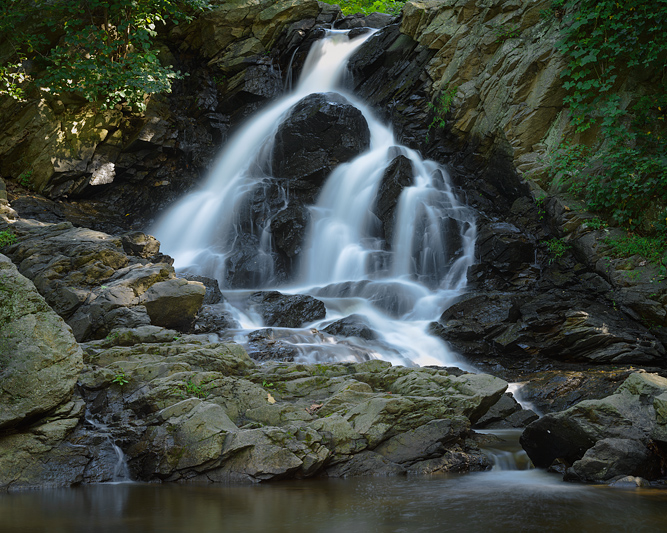
It gets a workout. I had to wait for some rafters to photograph themselves in the falls before I could get this exposure.
10-frame in-camera exposure, 28-90 Vario-Elmarit, Nikon 800e, Lr 4, Ps CS6.
Shays Run Elakala Falls
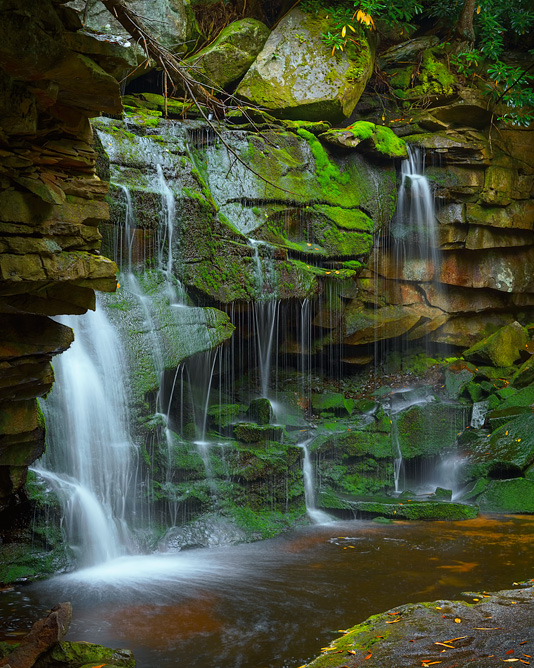
A ten-frame exposure in-camera merge. There seem to be fewer artifacts with this technique than with Photomatix Pro Fusion. I rarely use HDR Tone Mapping these days… way too many artifacts and distortions. This is from a weekend of visiting falls and trying to keep the equipment dry.
50mm Zeiss Makro-Planar ZF.2, Nikon 800e, Lr4, Ps CS6.
Shay’s Run at Elakala
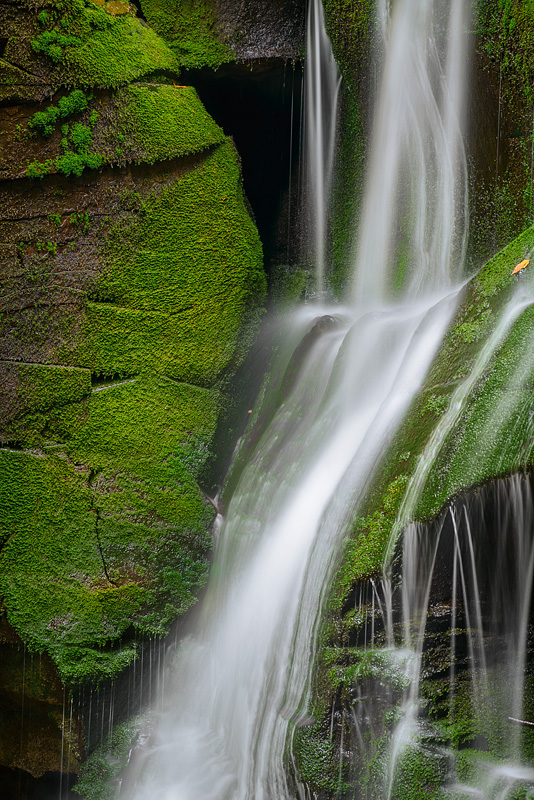
This image was updated to the current view on 10/3.
Another 10 exposure in-camera merge from last weekend with photo-buddy Bob Clark.
I apologize for the lackluster rendering. I am suddenly having some computer and color management problems after a disagreement with Google. I’m sure the remarkable temporal relationship between these two events is simply a coincidence.
80-200 Vario-Sonnar, Nikon 800e, Lr4, Ps CS6.
Shay’s Run – Elakala One
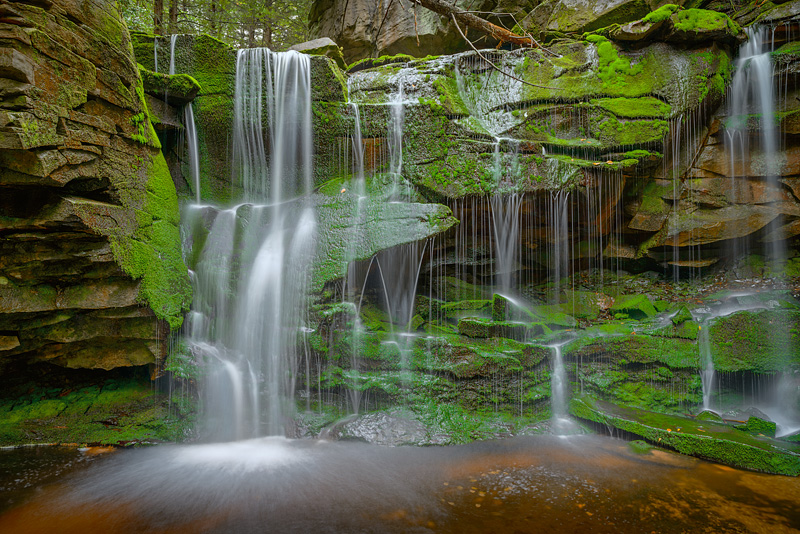
Ten exposure in-camera raw file merge. Kind of interesting way to avoid using ND filters. You still get a raw file out of it, but I sure wish the camera interface allowed for this feature to be combined with some of the other capabilities. It does work with burst mode, but burst does not allow for mirror lock up. The combination of the three would be terrific!
Clearly you don’t have the control you have with an HDR fusion on the computer, but there is nothing to prevent the user from shooting two or three brackets to merge later as three individual frames.
I should have dug out my polarizer, but it was raining pretty hard so I was mostly trying to keep my gear dry while I grabbed what shots I could from under a leaking ledge. This parting shot was made from the sandbar in the middle of the stream.
From my first visit to Shay’s Run this past weekend with photo-buddy Bob Clark.
10 frame camera merge, 21mm Distagon ZF.2, Nikon 800e, Lr4, Ps CS6.
Big Run Falls

From this past weekend trip with photo buddy Bob Clark. All the rivers and creeks were seasonally low even though we were soaked by storms passing through that day.
This is perhaps a four or five foot drop and marks the beginning of the Glissade. The First Falls, maybe a fifteen foot drop, is partly visible in the upper right. The Glissade gradually ends as it becomes the Second Falls, a hefty twenty foot drop. And who knows what all is downriver from there. But I do know that the climb back up from downriver will be a bear. Ask Bob about his bushwhacking adventure trying to get out from below Second Falls. He did battle with the Rhodo-Ents.
I photographed in the headwaters bog (I have been calling it Olsen Bog) enjoying its unique flora several years ago, but I didn’t explore downstream. Fran and I found the falls a few weeks ago after revisiting the bog. We could hear them roaring below us but didn’t feel like bushwhacking down to explore that day.
I look forward to visiting this little gem in the spring when the groundwater and headwater Olsen Bog are fully charged.
I have a number of images to work up and post from this short trip of Big Run, Shays Run, and Canaan Bog, so if you like this one stay tuned!
From a single exposure: 28-90 Vario-Elmarit, Zeiss circular polarizer, Nikon 800e, Lr4, Ps CS6.