Canaan Mountain Bog
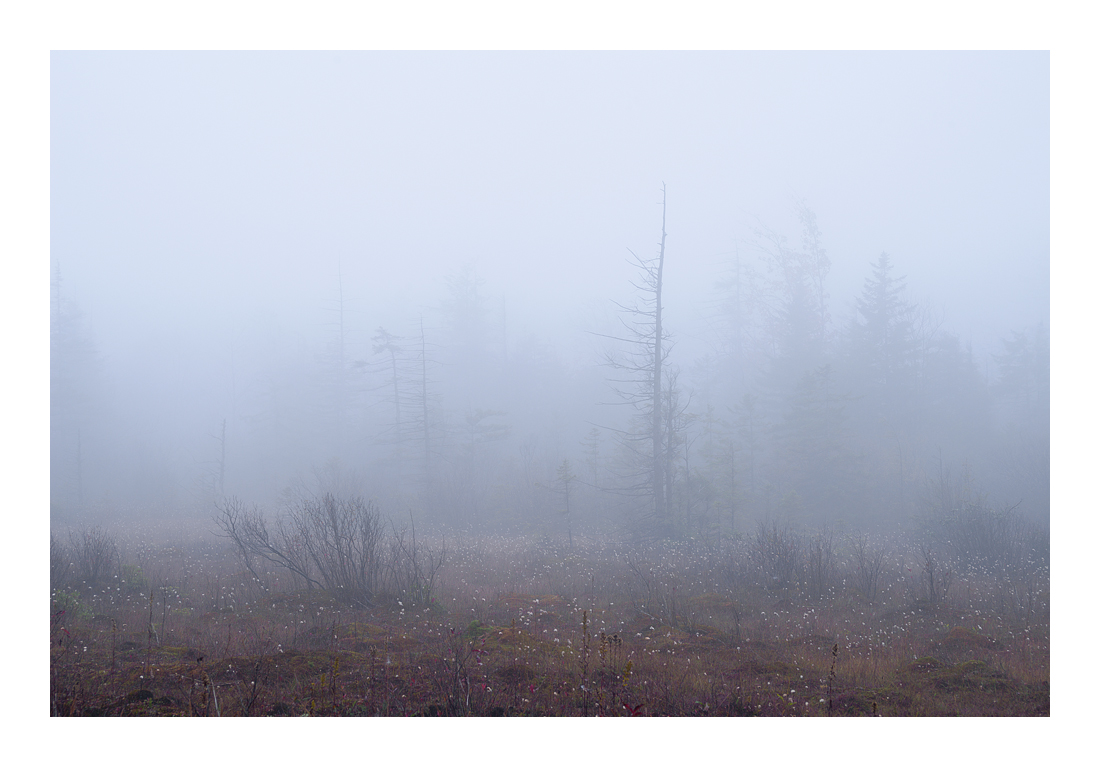 A beautiful and fragile environment this is. The surface of the bog is largely sphagnum moss growing on a layer of thousands of previous generations of sphagnum moss. This layer, perhaps a foot thick, seems to float on a layer of flowing water. And the water, varying in thickness from a maximum of several inches depending on usually the plentiful precipitation, is underlain with rock. So the larger vegetation growing in the bog is very shallow rooted, and thus subject to all kinds of problems. Winter here is ferocious, with constant wind freeze-drying buds and throwing over entire groups of trees. Temperatures are bitter, and probably the only thing keeping the shallow roots from being destroyed by freezing is a generous layer of snow.
In this image taken in late fall you can see cotton grass, Eriophorum sp., some Nemopanthus and viburnum, and a flagged hemlock, Tsuga canadensis. The hemlock barely hang on in these exposed areas but they are probably safe from the adelgids because of the weather. The trees barely visible in the background are growing on higher ground. They are a mix of red pine, white pine, hemlock, red spruce, maples, birch, and an occasional stunted red oak. Also with a rhododendron and mountain laurel understory. Though not visible in this image a few small stands of our native balsam firs, Abies balsamea, exist in the area. Some say these are Canaan fir, a cross between balsam fir and the more southern Fraser fir, Abies fraseri.
28-90mm Leica Vario-Elmarit, Nikon 800e, Lr4, Ps CS6.